The Cognition and Learning Building is Forman’s newest academic building and a milestone in the school’s commitment to sustainability.
The facility is carbon-neutral, powered by 12 ground-source heat pumps, also known as geothermal wells, installed 450 feet underground. The wells provide heating and cooling year-round without the use of a furnace or boiler.
Sustainability is identified as a priority in Forman’s Strategic Plan, which seeks to explore and expand renewable energy opportunities to ensure our campus is efficient in its energy consumption and supportive of a healthy environment.
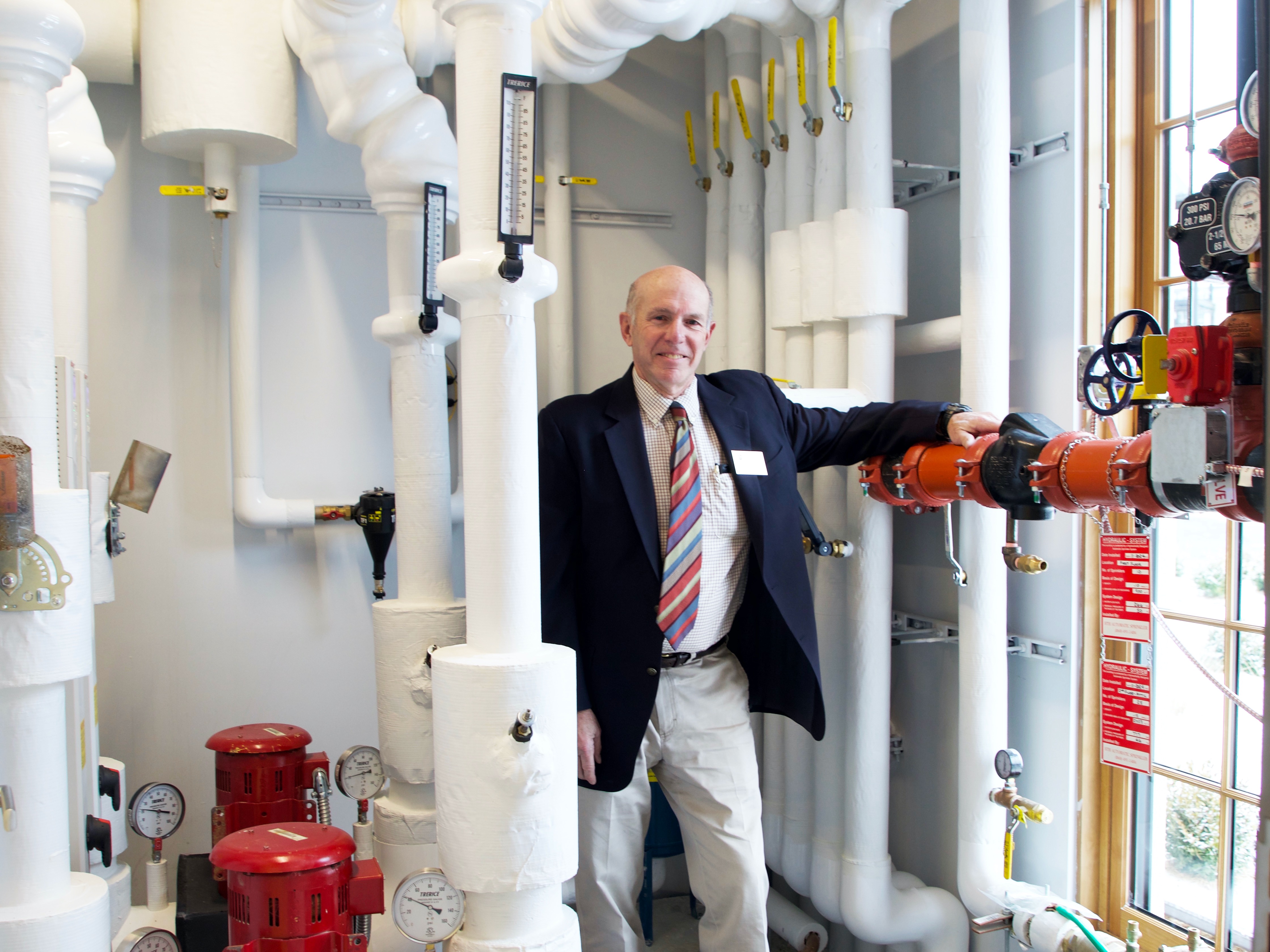
“Forman is growing and using state-of-the-art methodology and equipment, not only in its teaching but also in the school environment and by having energy-efficient, modern buildings,” says David White ’71 (pictured), Chair of the Buildings and Grounds Committee on Forman’s Board of Trustees. David is also the Chairman of R.H. White Construction.
Geothermal systems have many benefits, including high efficiency, low environmental impact, long lifespan, and consistent performance regardless of weather.
“This is a really outstanding building that takes [full advantage] of geothermal and solar energy, using the earth’s resources to create a better learning environment,” says David.
The Cognition and Learning Building also has solar panels on its eastward-facing roofs and LED lighting throughout, which offset a portion of its electrical consumption. The LED lights are dimmable and feature adjustable color output to help reduce discomfort and distraction caused by bright or harsh white lighting.
How It Works
The geothermal system operates on a closed-loop system, taking advantage of the earth’s year-round steady temperature, typically around 50–60°F (10–16°C), by moving heat to or from the ground through pipes installed in vertical wells.
When heating the building, the system circulates an antifreeze solution through the pipes in the wells. As the fluid moves through the ground loop, it absorbs heat from the earth. This warmed fluid travels back into the building, where a geothermal heat pump extracts the heat and uses it to warm air, which is distributed throughout the building using a traditional ductwork system.
To provide air conditioning, warm air from the building is transferred to the fluid inside the geothermal system. That heat is then pushed into the cooler earth through the underground wells. The fluid cooled by the earth circulates back to the heat pump to continue the cycle. The heat pump uses the cooled fluid to chill air, which is then used to cool the building.
This article, in part, was originally published in Forman School's Fall 2025 Forman Letter magazine.








.png)