Written by Robyn Greenspan, MS, ACC, CAC
Forman School Cognition and Learning Teacher, Executive Function Coach
It’s a familiar instinct for parents and educators: the more a young person struggles, the more we help.
We remind. We organize. We make the list. We break the assignment into steps. We keep track of the time. We ask whether the backpack is packed, the homework is finished, and the permission slip made it into the folder.
And often, it works.
The child gets out the door. The assignment gets submitted. The room gets cleaned.
But who did the actual thinking?
If the goal is the child’s independence, that question matters.
As deadlines loom, urgency intensifies, patience drops, and frustration mounts; it’s easy to step in and decide what to do first, next, and when. Essentially, we become the executive function while the child is still developing their own.
Executive function skills help us turn what we intend to do into what actually gets done: planning, getting started, organizing, managing time, remembering, completing, and adjusting along the way. These skills aren’t tied to intelligence or effort, yet struggles with them are often mistaken for laziness or lack of motivation.
For adults, that creates a tricky balancing act: When do we step in? When do we step back? How much help is enough?
At Forman School, one way we think about that balance is through two voices every adult already has: Teacher Voice and Executive Function (EF) Coach Voice.
Teacher Voice provides what the young person doesn’t yet have: information, instruction, or direction. If they don’t know what to do or are trying something for the first time, teach the content.
EF Coach Voice redirects the thinking back to the young person. If they have the knowledge but need to figure out how to move forward, coach the process.
Teaching builds knowledge. Coaching builds ownership.
The challenge is knowing which one the moment calls for.
EF Coach Voice asks more than it tells and relies on curiosity and patience, allowing a single question to open the space for a child to start thinking critically. Using a process that feels slower can be difficult, especially when it’s 7:30 a.m., and everyone needs to get out the door, or 9:40 p.m., and an unfinished assignment is still sitting on the kitchen table.
The goal isn’t to help less. It’s to help in ways that build greater independence.
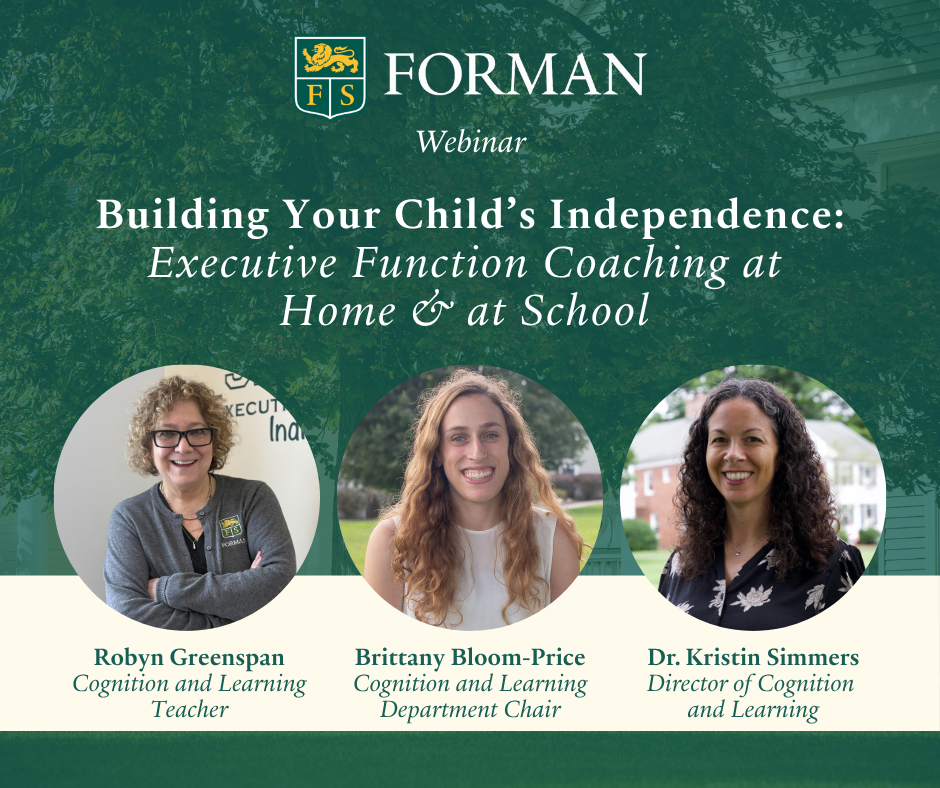
That’s what we explore in the webinar, Building Your Child’s Independence: Executive Function Coaching at Home & at School. Through everyday situations involving homework, routines, and resistance, we show the two voices in action and how small changes in adult language can shift more of the thinking—and eventually more of the ownership—to the child.
Watch the webinar recording to hear Teacher Voice and EF Coach Voice in action and learn practical language you can begin trying at home or at school.








.png)